
Andy Klotz
- Photographer
- Andy Klotz
- Based in
- Munich, Germany
- Shoots
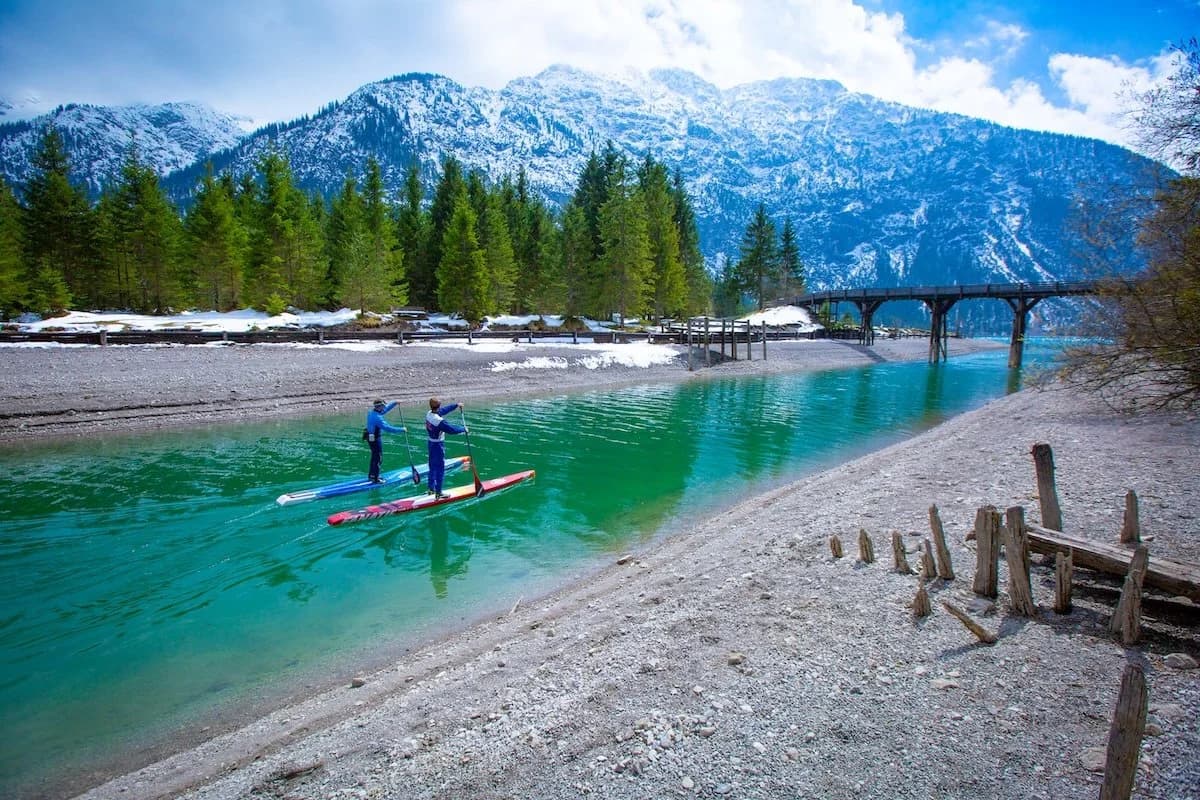
- SUP from land, water and sky; events, whitewater
- Gear
- Drone, long lens, underwater housing, wide-angle lens
- In this feature
- 31 photos
“Minimalistic – achieve the best possible result with little effort.”
Andy Klotz
We all can appreciate a good photo when we see one and in the Supconnect Photographer Series, we do just that. We connect with exceptional photographers in and out of the stand up paddle boarding world and showcase some of their many fantastic photos. This week, we are stoked to highlight Andy Klotz.
From the whitewater rivers of the Alps to the serene lakes of southern Germany, photographer Andy Klotz has spent decades chasing adventure and capturing it through his lens. Originally from Koblenz and now based in Munich, Andy’s journey into SUP photography began almost by accident—rooted in a lifelong passion for paddling and a deep curiosity for visual storytelling. With a background in mechanical engineering and an eye for minimalistic yet powerful compositions, Andy brings a unique blend of precision and spontaneity to every frame. In this interview, we dive into the stories, challenges, and philosophies behind his work, uncovering what it truly takes to photograph stand-up paddleboarding from land, water, and sky.
Supconnect: Tell us a little bit about yourself. Where you're from, age, family, etc.
Andy: I'm originally from Koblenz, a small town in central Germany. Because of my great passion for whitewater kayaking, as soon as I got my driver's license and my own car, I drove to the Alps almost every weekend as a teenager to go whitewater kayaking. I also passed my master's degree in mechanical engineering in Koblenz, and after completing my apprenticeship, I looked for a new job in southern Germany to shorten my commute to the Alps. I'm now 58 and have lived in Munich for 24 years, where I first encountered SUP almost exactly 15 years ago. I have two wonderful children (twins), who are now grown up and mostly do their own thing.
How did you first get into photography, and what led you to focus on stand-up paddleboarding?
I started taking photographs in 1993 when I was invited on a kayaking expedition to the island of La Reunion in the Indian Ocean. Back then, it was still analog with real film, where you had to wait a week or two after the trip to see if you'd produced a usable picture. Which is a quantum leap today with digital technology. You can see immediately what you've done wrong.
I didn't get into SUP until much later. At the beginning of the new millennium, a few shoulder injuries, which also required operations, forced me to practice my beloved kayaking much less than I would have liked. In 2010, I was canoeing with my children on a small river near Munich. That's where I first came into contact with SUP. Guido Meier, Etiene Stander, and Carsten Kurmis had organized a short river SUP tour for the Munich Eisbach surfers. I thought it looked exciting and definitely wanted to try it out. I took a few pictures of the boys and girls. And that's how some wonderful friendships were formed that still exist today.
What’s your go-to gear setup when shooting SUP—camera, lenses, water housing, drone, etc.?
Everything depends on what opportunities arise.
How do you decide between land, water, or aerial angles when capturing a scene?
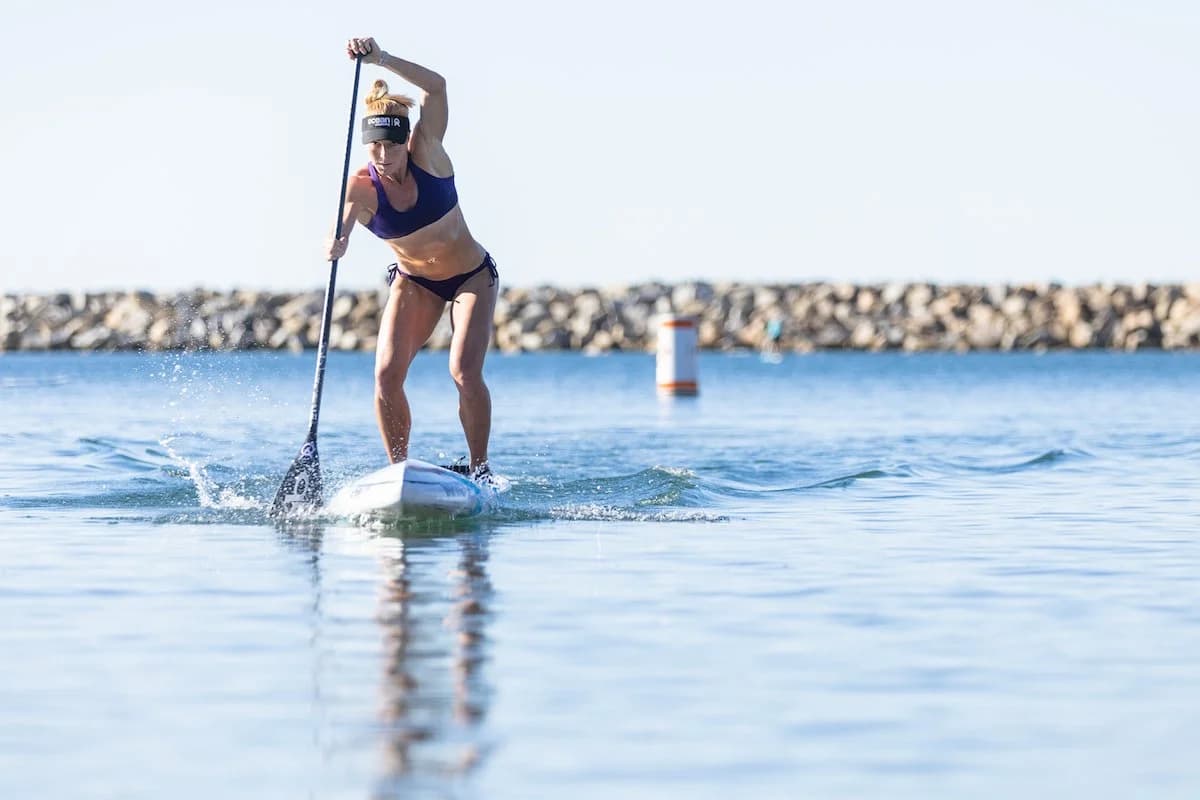
My goal is to always capture as many different perspectives as possible. That's why I always alternate between the options available to me during an event. I use a drone for the start and to follow the field of competitors. Then I use a long focal length to shoot the buoy turn from the shore. I use the underwater housing to shoot close-ups from the water, then use the wide-angle lens to shoot the finish line.
What’s the biggest technical challenge when shooting on the water, and how do you work around it?
Well... the water itself. Especially the salt water. You try to avoid contact with your equipment as much as possible :-). I did lose a drone to the water god, though. I once lost a camera. But I was able to fish it out quickly enough and dry it out in the oven at 50 degrees Celsius. It actually worked perfectly again afterward. If you want to take good pictures, you have to take a certain amount of risk every now and then.
What’s one SUP photo you’ve taken that you’ll never forget—and why?
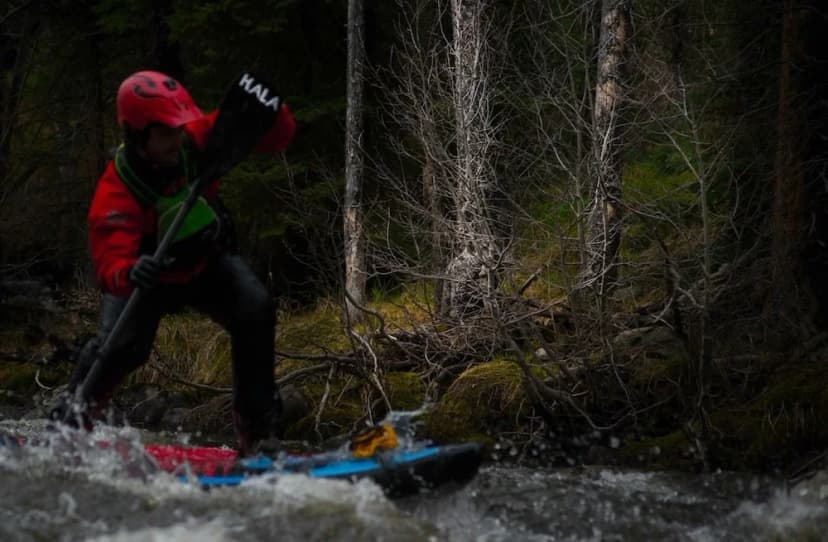
The first descent of the “schrägen Rippen” on the Rissbach stream in the Karwendel Mountains. An extremely challenging section for SUPs, rated 4 out of 6 in whitewater. A few friends and I decided to do a night shoot at this spot. I lit the scene with a few simple system flashes. The photos turned out to be truly special, thanks to the unique location, the people who were there, and the unusual time of day.
Have you ever had a moment where the conditions were terrible but you still ended up with an incredible shot?
It's terrible when it's pouring with rain, cold, and windy at an event. Not only does the fun slowly stop for the participants, but the photographer also reaches his limits. But since I'm booked, I still have to deliver somehow. At least as long as the competition is going on. If the participants are on the water, I'm there with my lens, no matter how bad the conditions are. And sometimes... that's when a really special picture comes out.
How do you collaborate with paddlers to capture the best moments—do you give direction, or let it unfold naturally?
Partly, partly. In whitewater, I sometimes have the models do the same spot five times until I'm satisfied with the shot. For planned commercial shoots, I give clear instructions so that it turns out exactly how I envisioned it. If we're just out for fun and I have my camera with me, then the picture can simply emerge from the situation.
Is there a particular athlete or trip that’s been especially memorable to shoot?
Not one particular athlete. The Istrian SUP Challenge 2021 was one of the most impressive in recent years. I was able to accompany a handful of paddlers who paddled along the entire coastline of Istria (a peninsula belonging to Croatia) on their boards. Every day, between 30 and 50 km on the open sea, sometimes in stormy conditions, for an entire week. It demanded everything from all of us.
How would you describe your visual style in one sentence?
Minimalistic – achieve the best possible result with little effort.
What emotions or energy do you try to evoke when capturing a SUP session?
Fun… my pictures are meant to show how much fun this sport, in all its facets, brings to the people who practice it.
What’s been your favorite destination to shoot SUP so far?
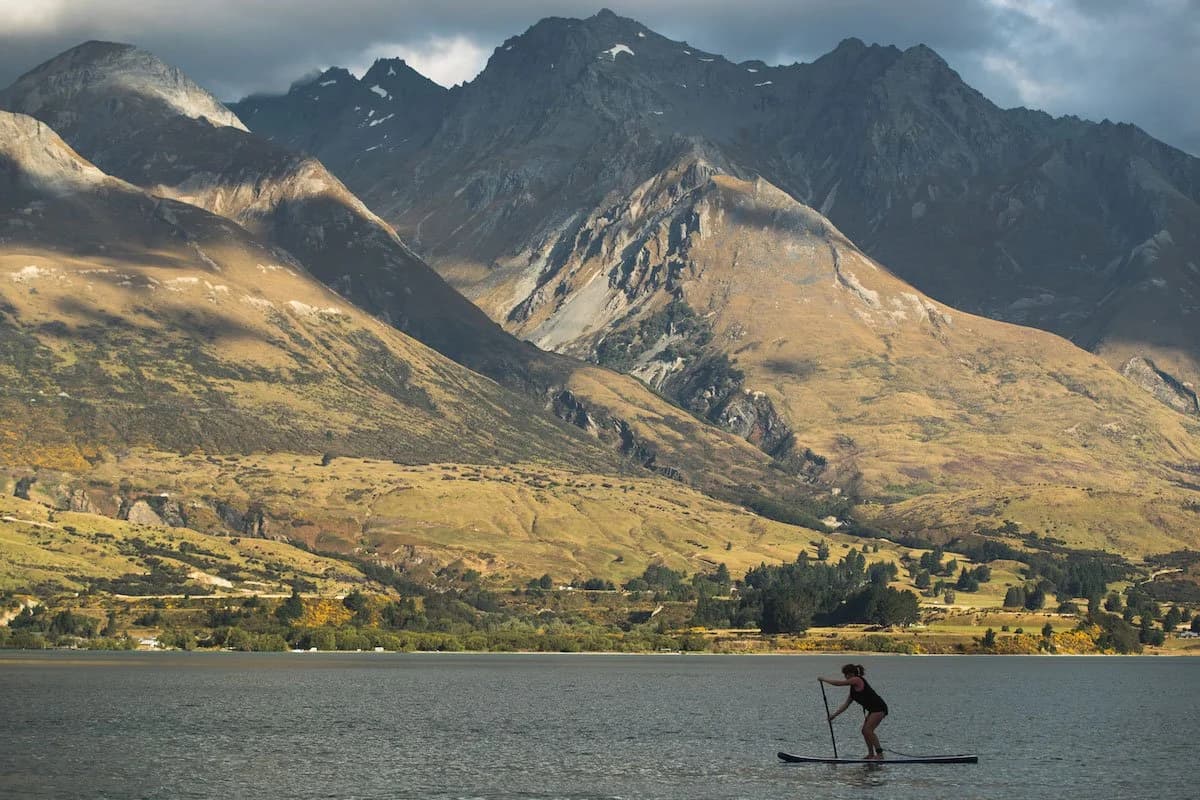
I absolutely love being by the sea. But I still like my homeland best, with our countless lakes throughout the Alpine foothills.
Is there a dream location you haven’t shot yet but hope to?
Thailand… I would like to go there.
What advice would you give to aspiring photographers looking to break into SUP or watersports photography?
Stay tuned… and make sure there is no crane or power pole in the background of the picture :-)
Where do you find creative inspiration outside of paddleboarding?
When hiking or in winter, when ski touring in the Alps.
Favorite time of day to shoot?
If I can decide for myself, i.e. if I'm not out taking photos at an event, then it's either sunrise or sunset.
SUP in flat water or surf?
Both, but I still have to work hard on my surfing performance :-)
Awesome Andy! Thanks so much for taking the time to chat with us and keep up the awesome work! For those interested in working with Andy or hiring him for photos, shoot him an email.
To see more SUP Photography features, click here.
More Photographers
Shoot stand up paddling? Send us your best frames for the Photographer Series.
Submit Your Photos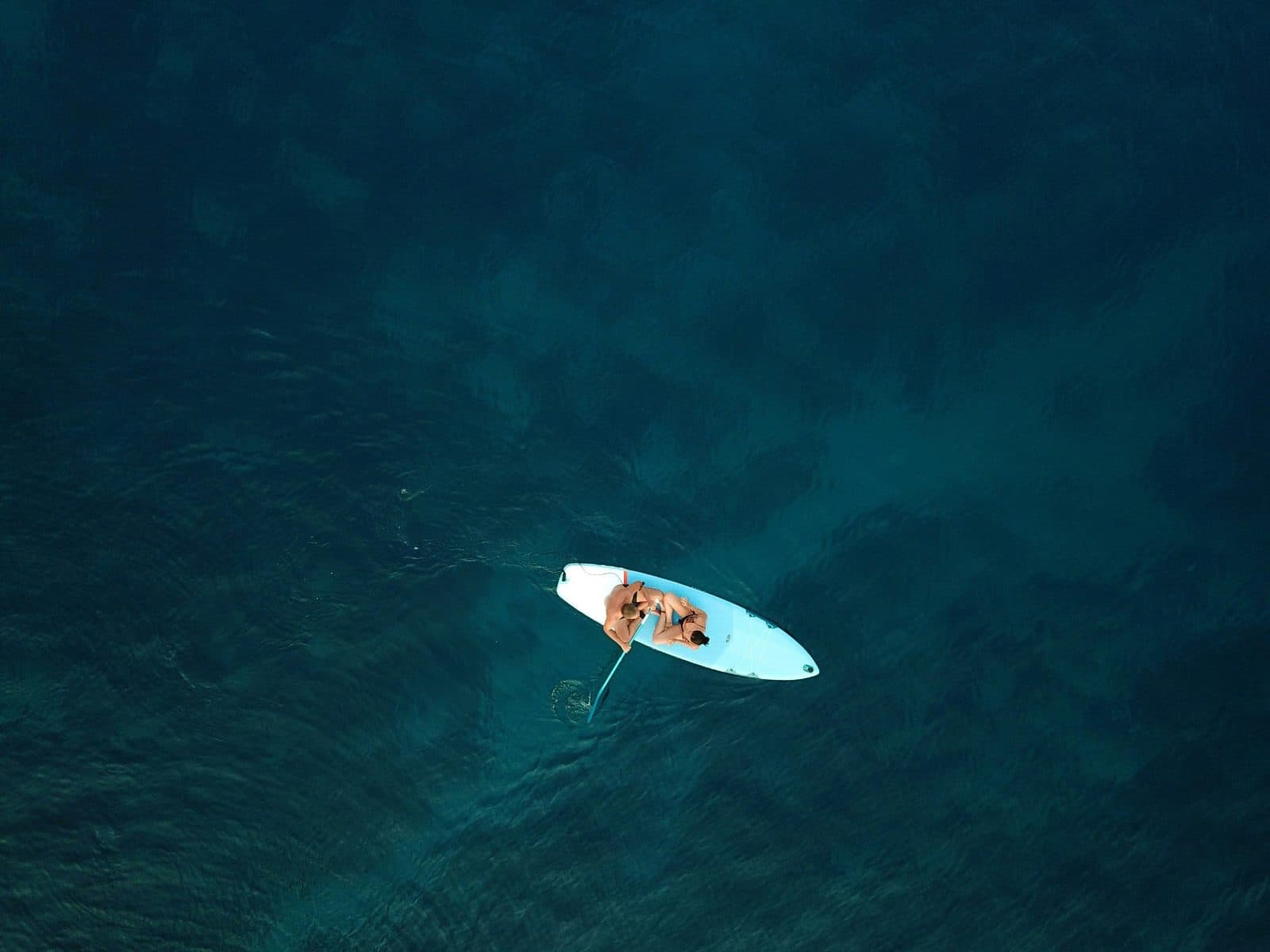
Connect For TheLatest News
Receive the latest in stand up paddleboarding news, reviews, tips, giveaways and more.
One email a week. Unsubscribe anytime.