
Kurima–Tarama SUP Crossing: 52km Ocean Route
The Ocean Is Not a Boundary
For our ancestors, the ocean was never something to cross—it was something to live within. Across the Pacific, an ancient maritime network once connected islands and cultures. From Taiwan to Okinawa, through Southeast Asia and out into Polynesia, Austronesian people moved across the sea with intention, skill, and deep understanding. For the people of the Ryukyu Islands, the ocean was not a barrier—it was a highway.
Small vessels traveled these waters long before engines or borders existed, carrying trade, knowledge, and life itself between islands. The mastery of paddle and sail was not sport, but survival and identity. Today, that connection has almost disappeared. This project is about bringing it back.
A Culture That Drifted Away
My roots lie in these islands. There was a time when ocean knowledge was part of everyday life—when reading currents, wind, and tide was as natural as walking on land. That knowledge was passed down across generations.
But after the Ryukyu Kingdom was integrated into Japan in 1879, that way of life began to fade. The freedom to move across the sea diminished, and the culture of paddling slowly disappeared. Over time, the connection between people and the ocean was lost. In recent decades, rapid resort development has changed the relationship even further. The sea, once a source of strength and survival, has been reduced to scenery—something to look at, rather than something to live with. The “KURIMA–TARAMA” crossing is my attempt to reconnect with that lost identity.
The Crossing: 52 Kilometers of Moving Water
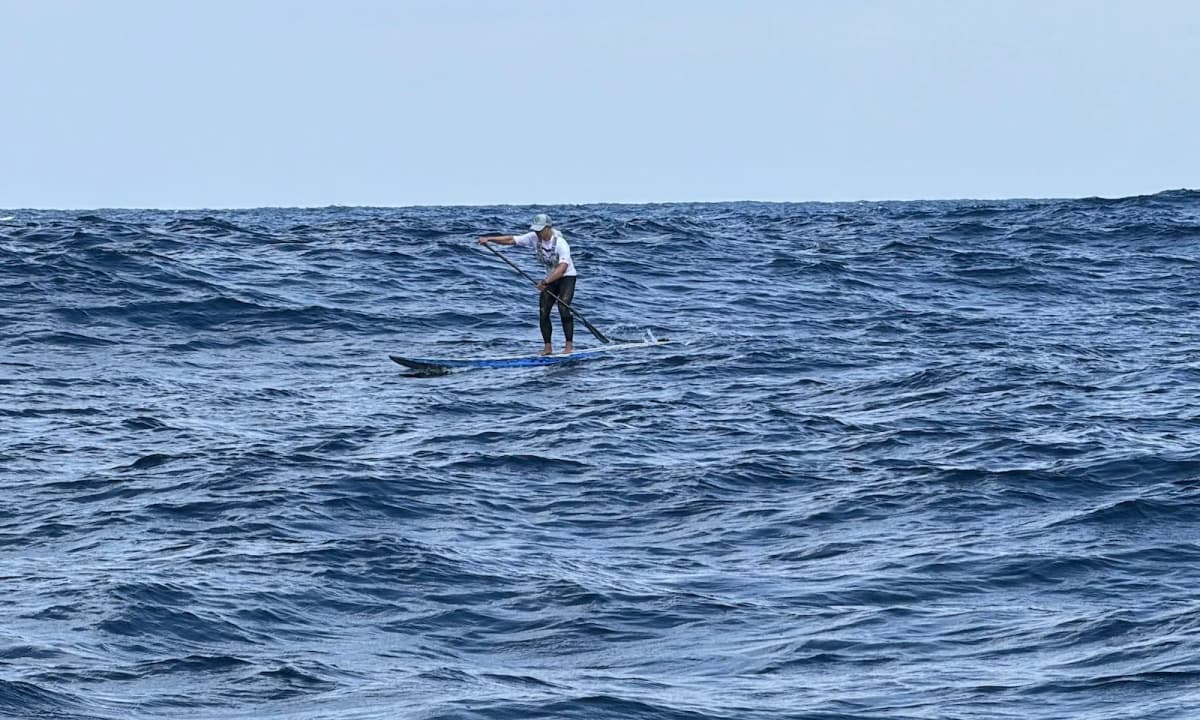
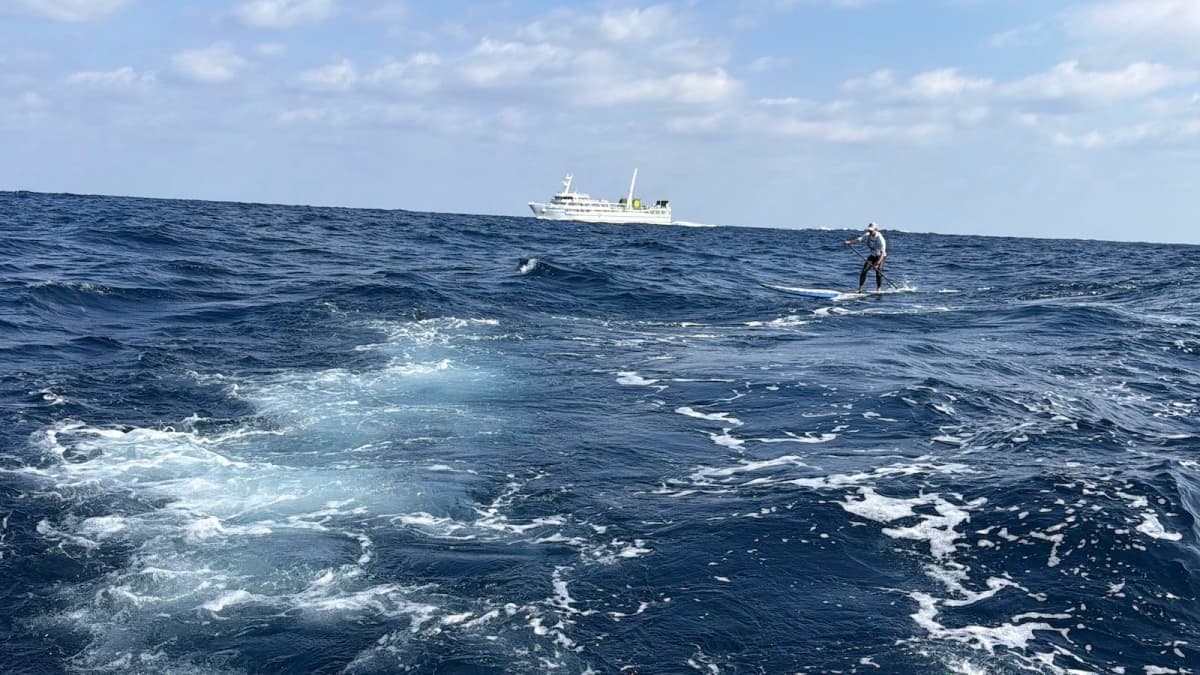
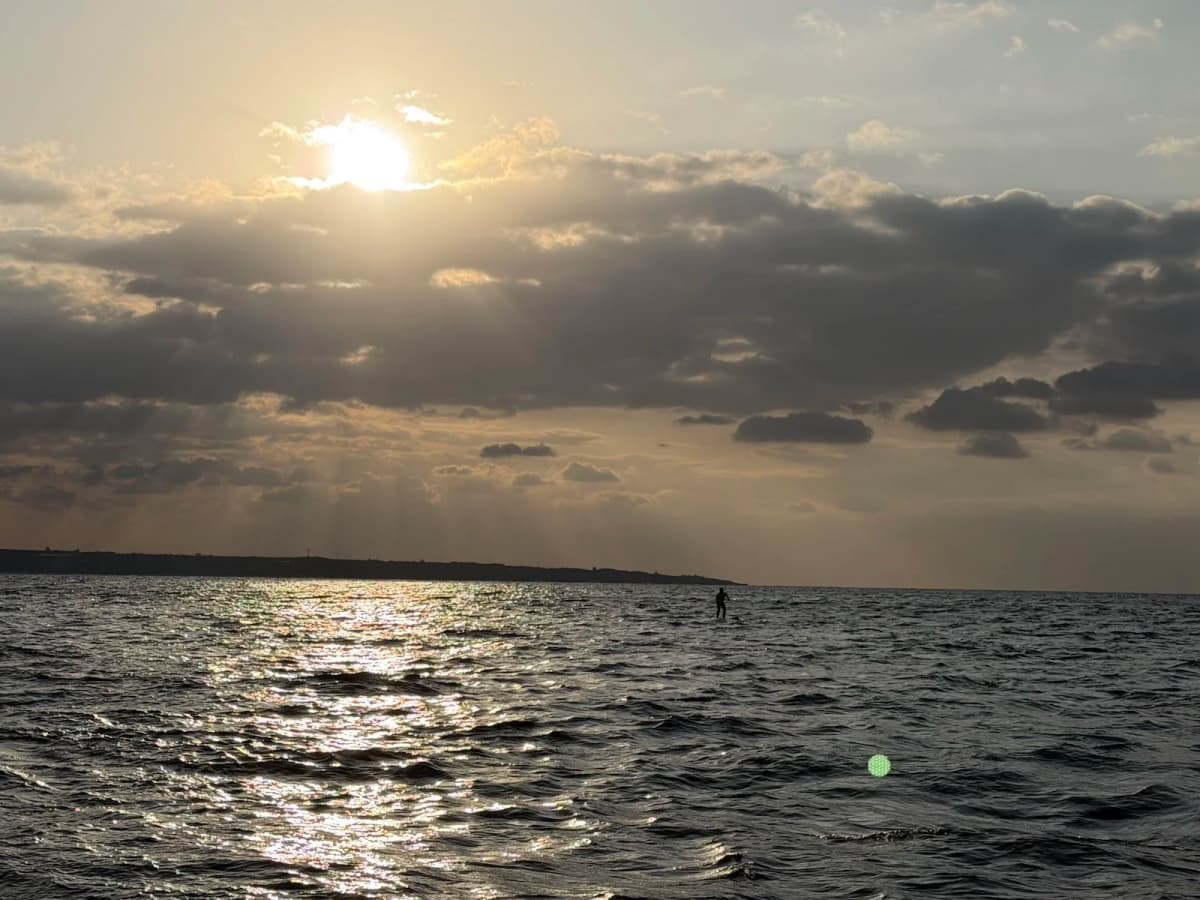
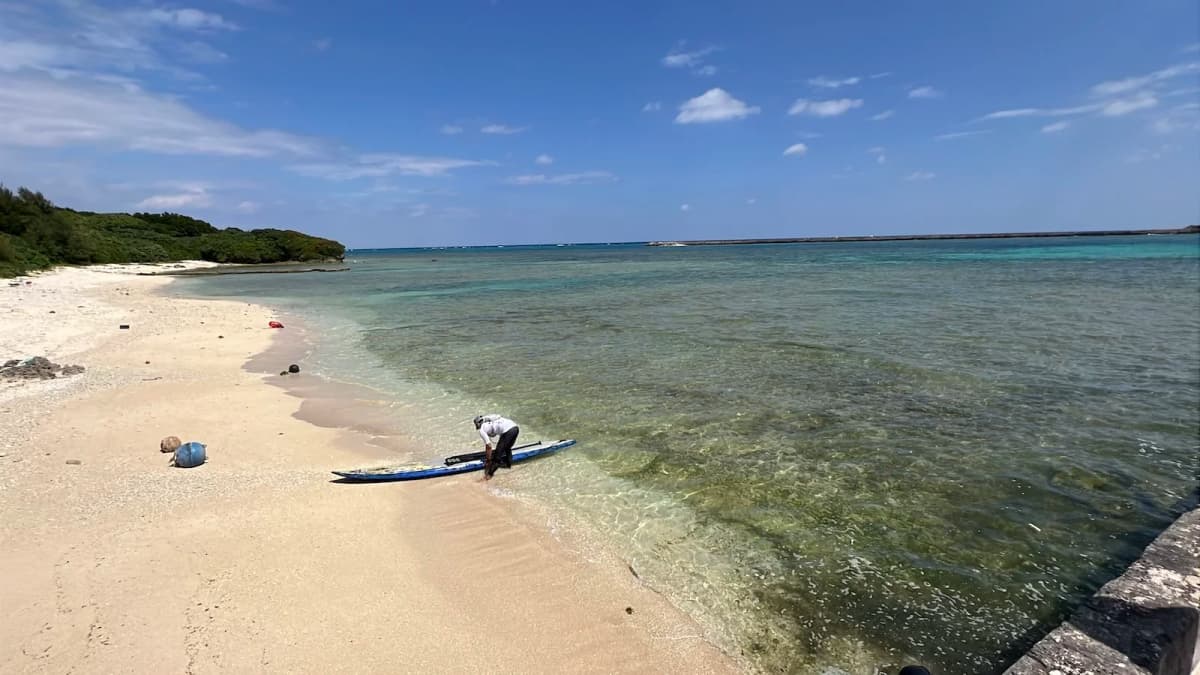
March 11, 2026. I set out to paddle 32 miles (52 km) from Kurima Island to Tarama Island, following a route shaped not just by geography, but by history. Beneath the surface lies a deep underwater canyon where some of the fastest tidal currents in the region collide. On that day, the ocean refused to stay still. Tides shifted from south to north, then turned northwest to southeast, pushing against opposing winds. The water did not move in a single direction—it surged, crossed, and rose unpredictably.
Around the halfway point, the current began to turn against me. The board slowed, my rhythm broke, and for a moment, the distance ahead felt much longer than 52 kilometers. Out there, there is no shortcut—only forward.
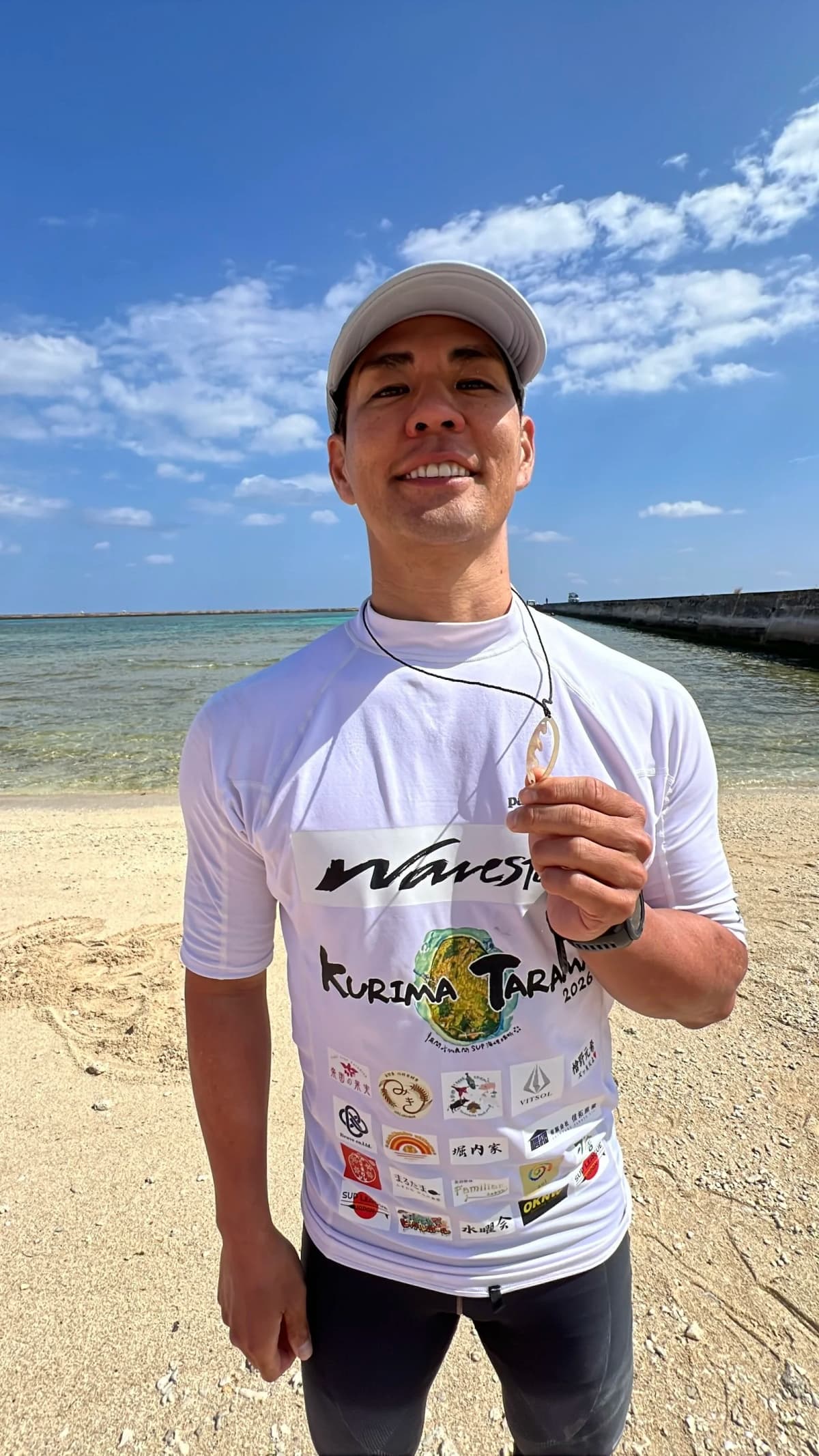
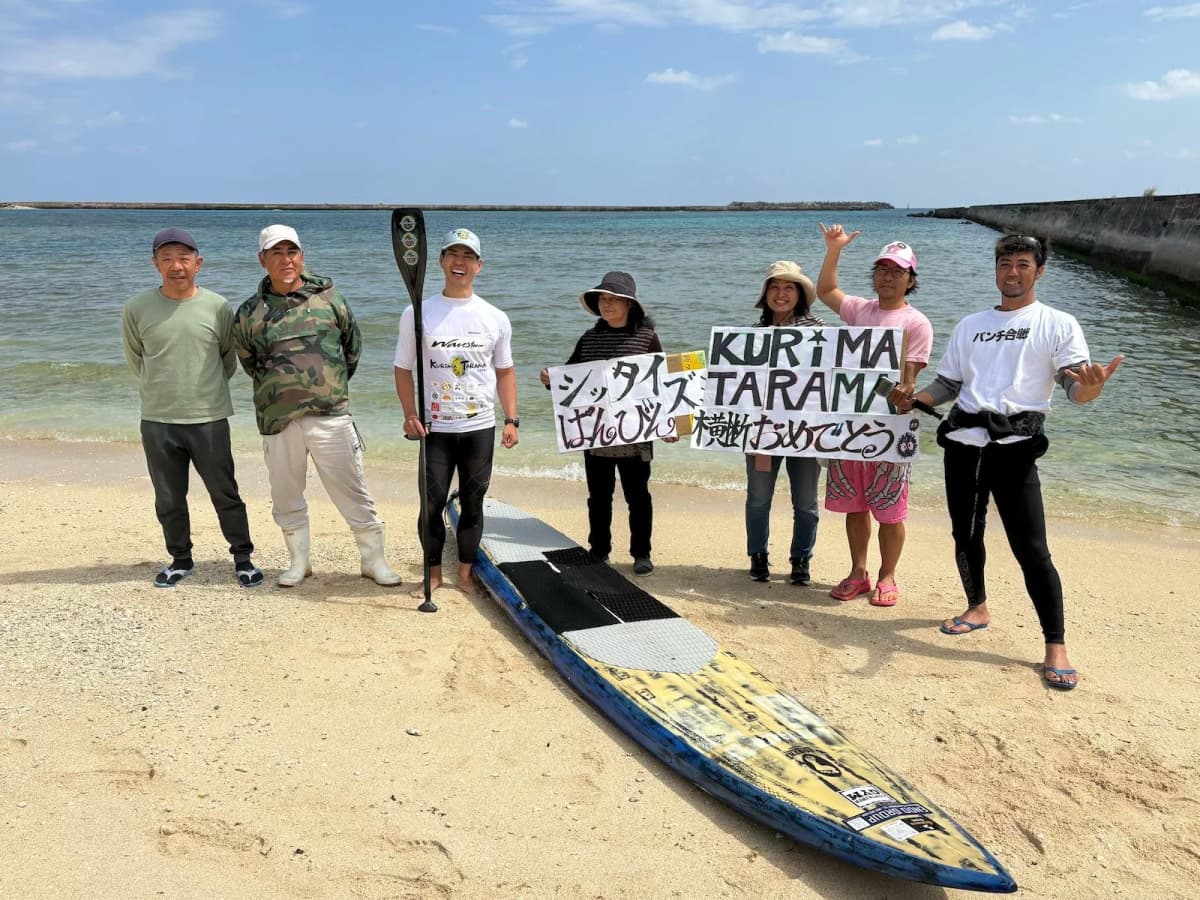
Stroke by stroke, I adjusted to the movement of the ocean—not fighting it, but learning to move with it. After 6 hours and 25 minutes, I reached Tarama Island, completing not just a crossing, but reopening a route.
Expedition Data
-
Distance: 32 miles (52 km)
-
Time: 6 hours 25 minutes
-
Wind: Avg. 5 m/s (max 8 m/s)
-
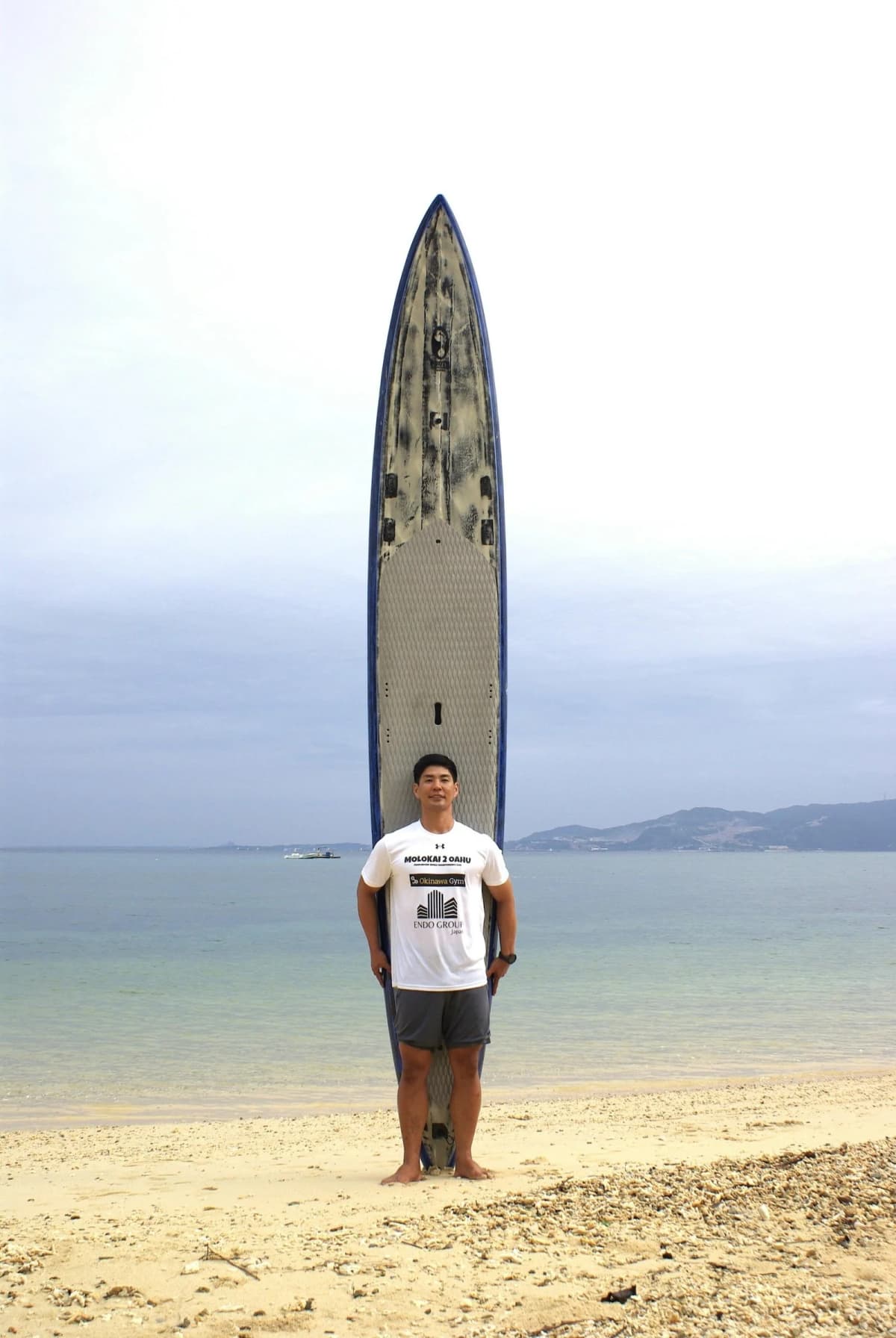
Board: Bill Foote Maliko (14' × 25.5")
Beyond This Crossing
This was not the goal, but the beginning. The vision is to establish an Asian SUP Island Circuit—a network of long-distance paddle routes connecting islands across the region, inspired by ancient maritime paths.
The next objective is a crossing between Taiwan and Yonaguni Island, approximately 110 km through the Kuroshio Current. This powerful current, often called the “Black Current,” has shaped migration and movement in this region for centuries. To paddle this route is not only a physical challenge, but a way of retracing the path of those who came before us—reconnecting Taiwan and the westernmost edge of Japan through human power alone.
More Than a Sport
This project is about more than endurance. It is about reviving Okinawa’s maritime culture, reconnecting with Austronesian roots, creating a new form of ocean-based cultural route, and inspiring the next generation to see the sea differently.
The ocean should not be something we only look at—it should be something we understand.
Paddle the Islands. Reconnect the Civilization.
The ocean was never meant to divide us. It was meant to carry us. And through each crossing, that connection can live again.
Check out video highlights of the expedition below.

Connect For TheLatest News
Receive the latest in stand up paddleboarding news, reviews, tips, giveaways and more.
One email a week. Unsubscribe anytime.