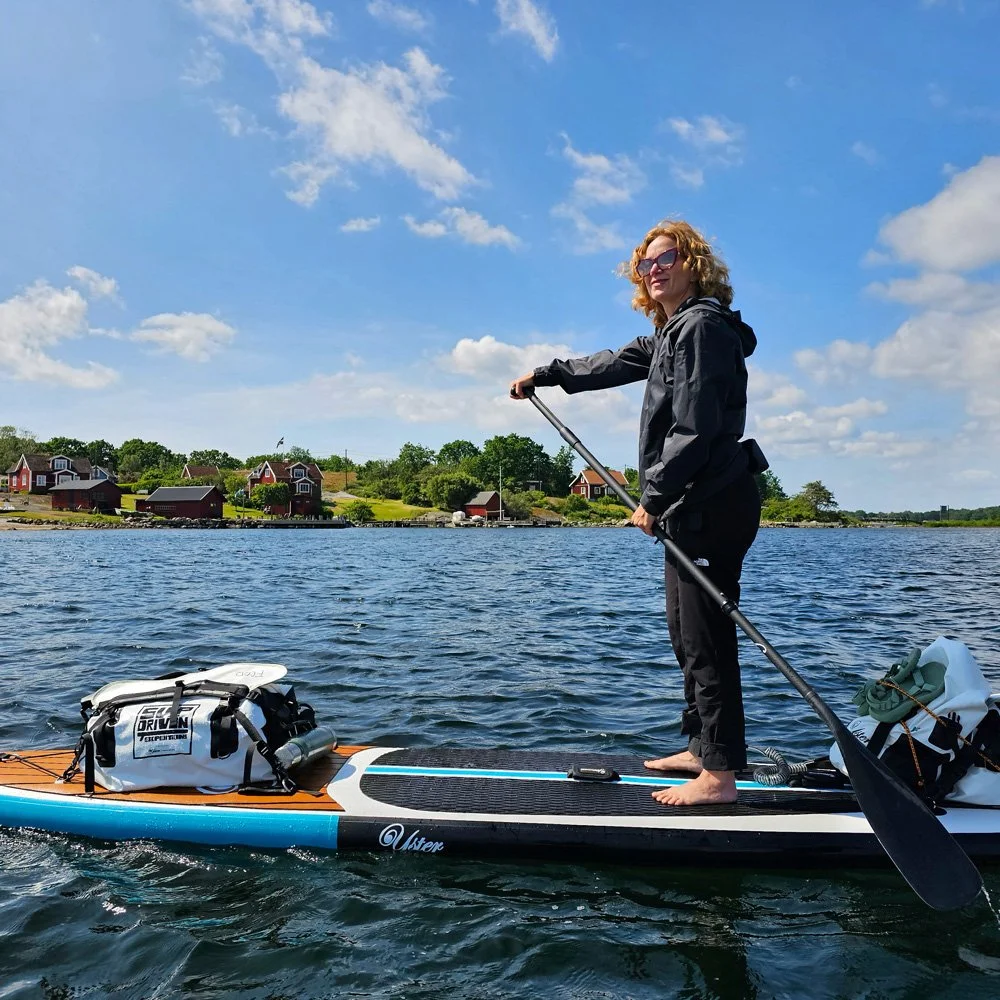
Paddleboarding Kenya
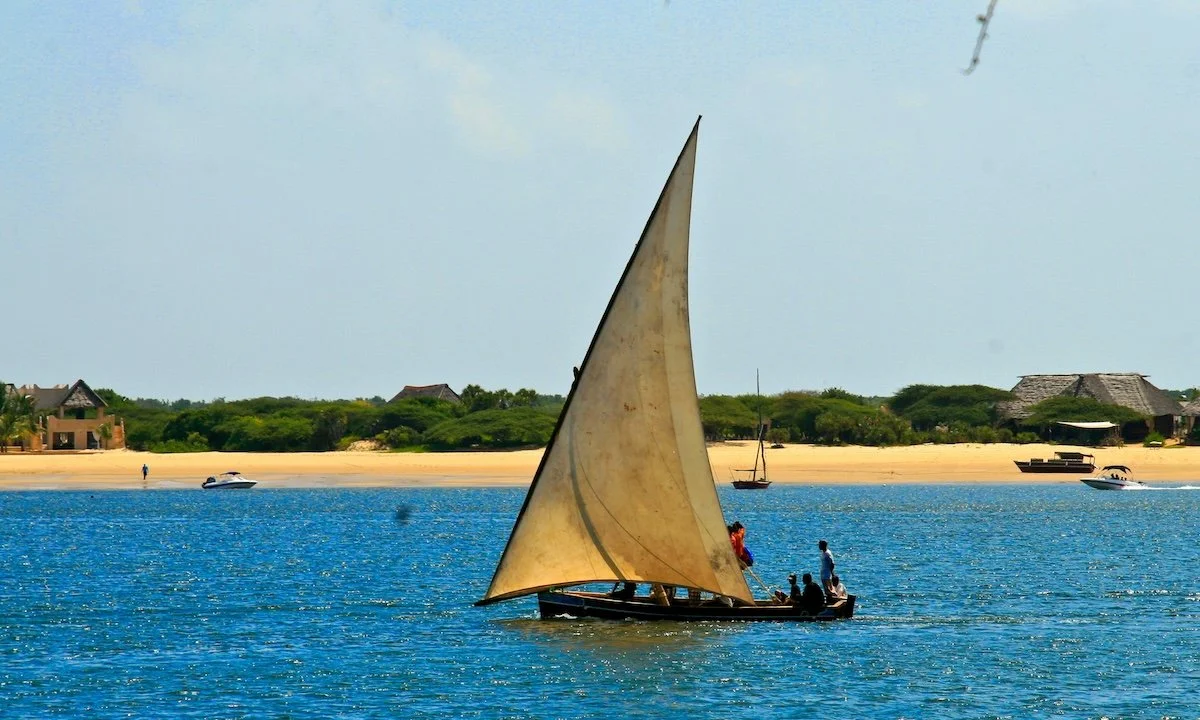
Traditional Dhow. Lamu, Kenya. | Photo: Stanislav Lvovsky / Unsplash
Kenya is not the first country that comes to mind when people think of stand-up paddleboarding. However with a coastline shaped by centuries of Indian Ocean trade, inland rivers with serious white water, and one of the world’s largest lakes, Kenya offers something off the beaten track. You would be wise to bring your own inflatable board with you. Finding rentals can be difficult and they are often quite bad quality.
Seasons
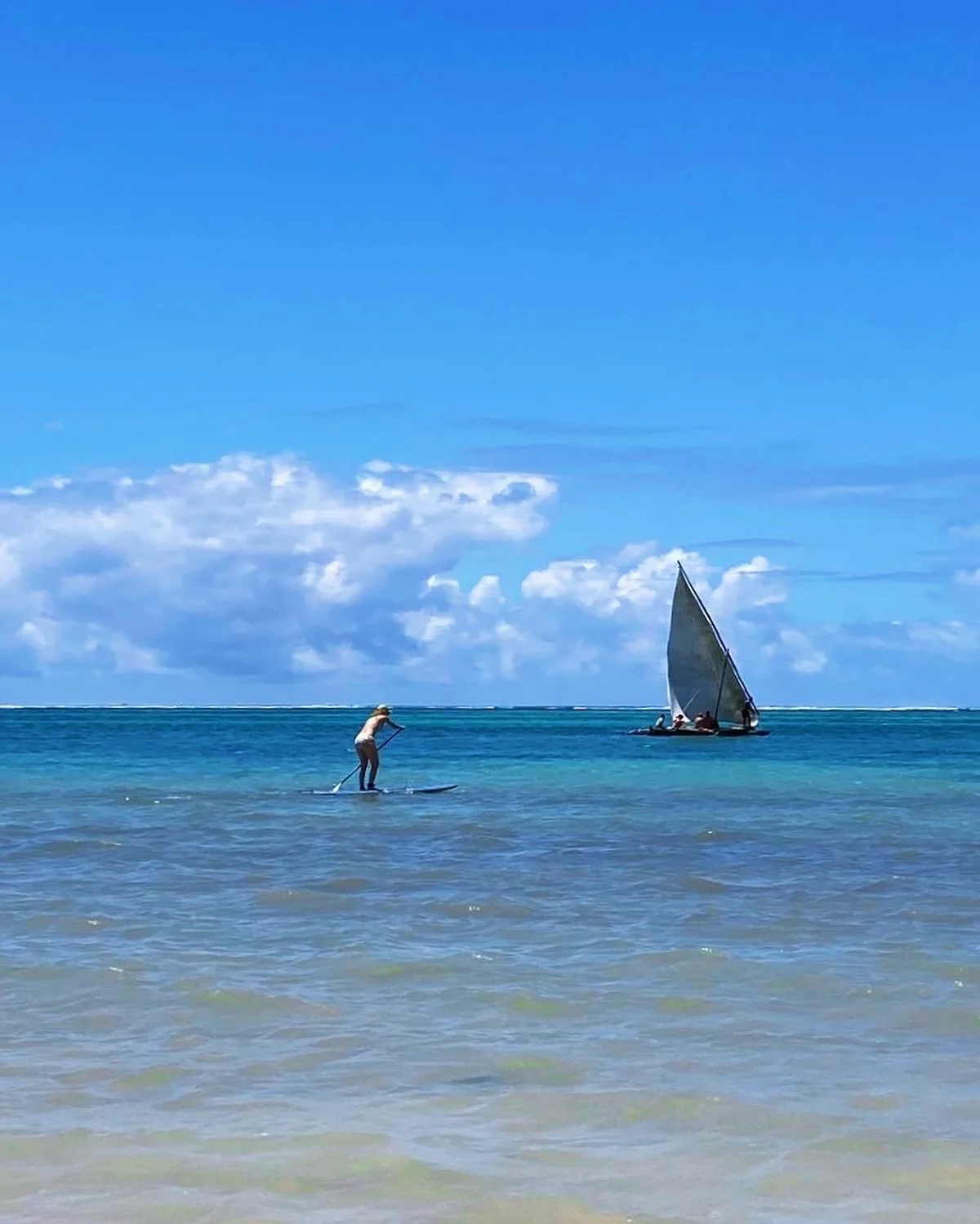
Kenya can be explored year-round, but coastal conditions are shaped by two wind seasons. The Kaskazi season runs roughly from November to March. Winds are lighter and more predictable, seas are calmer, and mornings are often glassy—making this the best season for SUP on the coast, particularly around Lamu and Watamu. Water temperatures are warm, visibility is excellent for snorkeling, and longer paddles in creeks, lagoons, and island channels are comfortably achievable.
The Kusi winds dominates from June to September. Stronger, more consistent winds bring rougher seas and surface chop. While this period is ideal for kitesurfing and sailing, it is generally less suitable for SUP, except in very sheltered areas such as mangrove creeks or early-morning sessions before the wind builds.
Inland destinations are less affected by winds, though river levels rise after the long rains (March–May), creating powerful white-water conditions and the vastness of Lake Victoria means winds can pick up there too.
Hot Spots
Lamu Archipelago – Meet Swahili Culture
Lamu is one of East Africa’s most atmospheric destinations. A UNESCO World Heritage Site, Lamu Old Town is a living record of Swahili culture, with coral-stone houses, intricately carved wooden doors, quiet alleyways, donkeys instead of cars, and a distinct node to the Arab cultures to the north. Add excellent restaurants, celebrity spotting, and fresh seafood and you will have nights to remember. Don’t forget to taste a Dawa cocktail.
The real magic, however, lies offshore. The Lamu Archipelago is a maze of small islands, sandbanks, and shallow channels—perfect for paddling. One of the most immersive ways to experience it is by chartering a traditional dhow, sleeping on deck under the stars, and paddling by day through deserted waterways. Dhows were once the backbone of Indian Ocean trade, transporting spices, timber, and goods between East Africa, Arabia, and Asia. Today, they offer a rare opportunity to combine SUP with deep cultural immersion—moving slowly, wind-powered, and entirely connected to the seascape. You can charter a traditional dhow for between 6-10 people, for example the Tusitiri via East African Retreats, for a multi-day experience that blends sailing, SUP, culture, and complete disconnection. It’s really like stepping back in time.
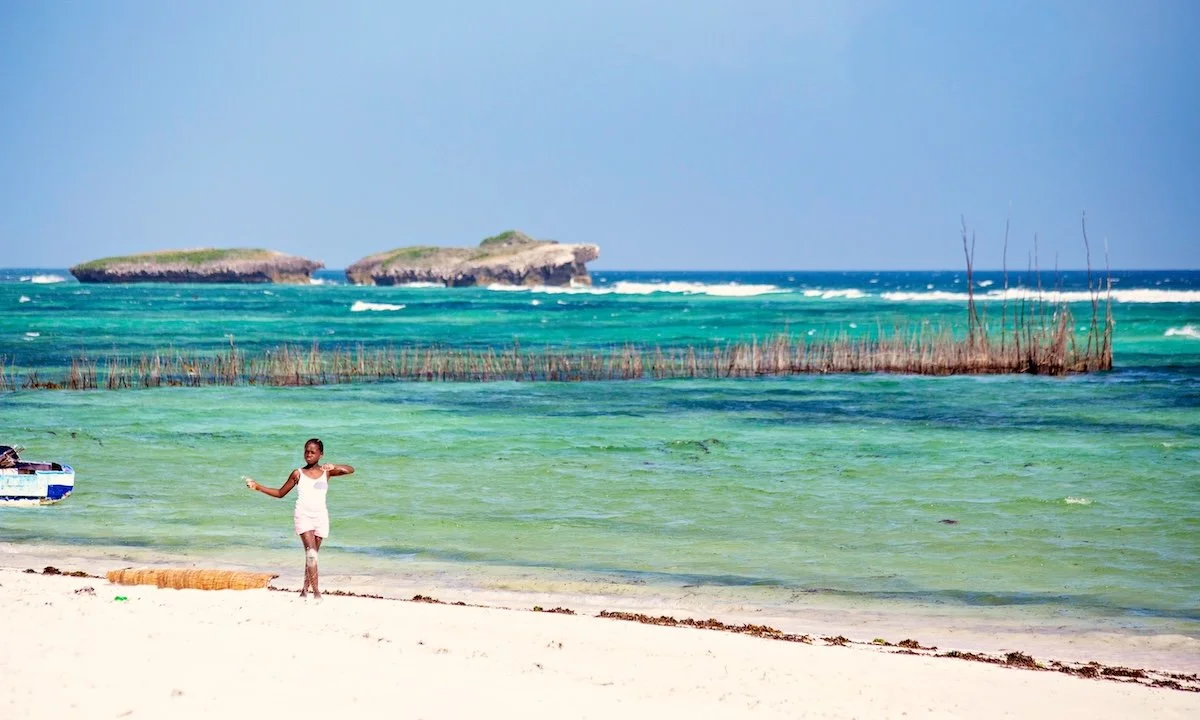
Paradise Beach in Watamu, Kenya. | Photo: Shutterstock
Watamu – Mangroves and Multi-Sport Days
Watamu is one of Kenya’s most versatile coastal areas for water sports. Here, a single day can include SUP in calm mangrove creeks, snorkeling over coral reefs, and kitesurfing in the afternoon breeze. The area sits within a protected marine park, and the water clarity is often good. The mangroves of coastal Kenya play a vital ecological role—protecting shorelines, supporting fish nurseries, and absorbing carbon. Paddling through these quiet green tunnels is a completely different experience from open-water SUP: slow, meditative, and rich with birdlife.
Watamu is also one of the few places in Kenya where you can reliably find high-quality SUP hardboards at The Treehouse. Known for its yoga-retreats, distinctive architecture and long-standing eco-philosophy, it offers a hidden path down to an endless white-sand beach, sunrise yoga sessions on the rooftop, and SUP experiences.
Sagana – White Water, Not SUP but worth a mention!
While Sagana is not a SUP destination, it deserves a place on any water-sports itinerary in Kenya. Located a few hours from Nairobi, it is home to serious white-water rafting on the Tana River. Trips range from day adventures to multi-day expeditions, and the guiding standards are world-class. This is fast, technical water that will keep you on your toes (but hopefully in the raft). Savage Wilderness offers some of the most respected rafting trips in East Africa, and have been a strong presence for decades. They also run pretty epic gravel bike trips if you want to get off the water for a bit.
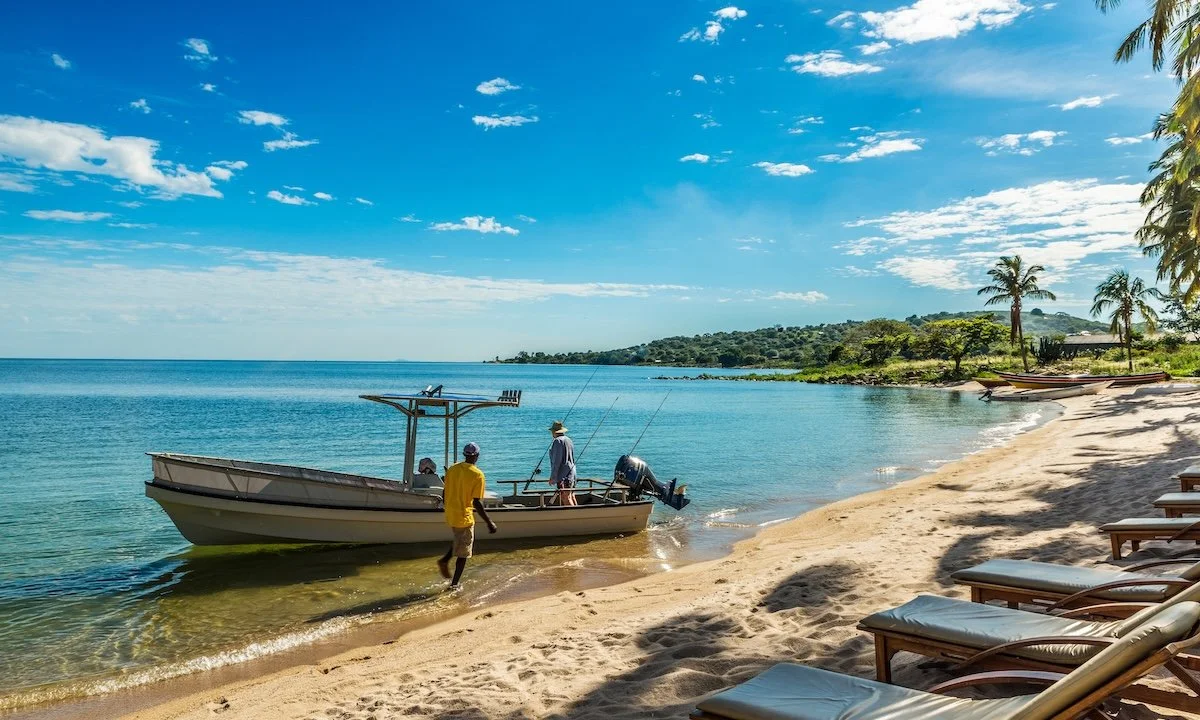
Takawiri Island in Lake Victoria, Kenya. | Photo: Shutterstock
Lake Victoria – Rusinga & Takawiri Islands
Lake Victoria is vast. Named after Queen Victoria, it is the largest lake in Africa and the second-largest freshwater lake in the world, shared by Kenya, Uganda, and Tanzania. Paddling here feels like being on an inland sea, with changing light, big skies, and long horizons. Wildlife encounters are part of the experience. Hippos, otters, mongoose, crocodiles, and turtles inhabit the lake however with some guidance of the the local people you will be fine.
Rusinga Island and nearby Takawiri Island offer a gateway into this lesser-known side of Kenya. The region is off the beaten track, yet you will still find comfortable lodges and warm hospitality. The local Luo culture is deeply connected to music, storytelling, and the lake itself—and evenings often come with rhythm and song. Rusinga Island is the more lived-in and culturally rich of the two. Connected to the mainland by a causeway, it is home to fishing villages, homesteads, and daily lake life. Paddling along its shoreline brings you close to fishermen setting nets at dawn, children swimming from the rocks, and music carrying across the water in the evenings. Rusinga is an excellent place to experience Luo culture. Takawiri Island, by contrast, is small, undeveloped, and calm. With no permanent settlements, it feels almost untouched—defined by rocky outcrops, fig trees, and quiet white beaches. The water around Takawiri is often clearer and calmer, making it better suited for relaxed paddling.
A unique advantage of this region is its connectivity: water-based exploration on Lake Victoria can be paired with a safari in the Masai Mara, Kenya’s most loved wildlife destination.
For more SUP destinations, click here.